
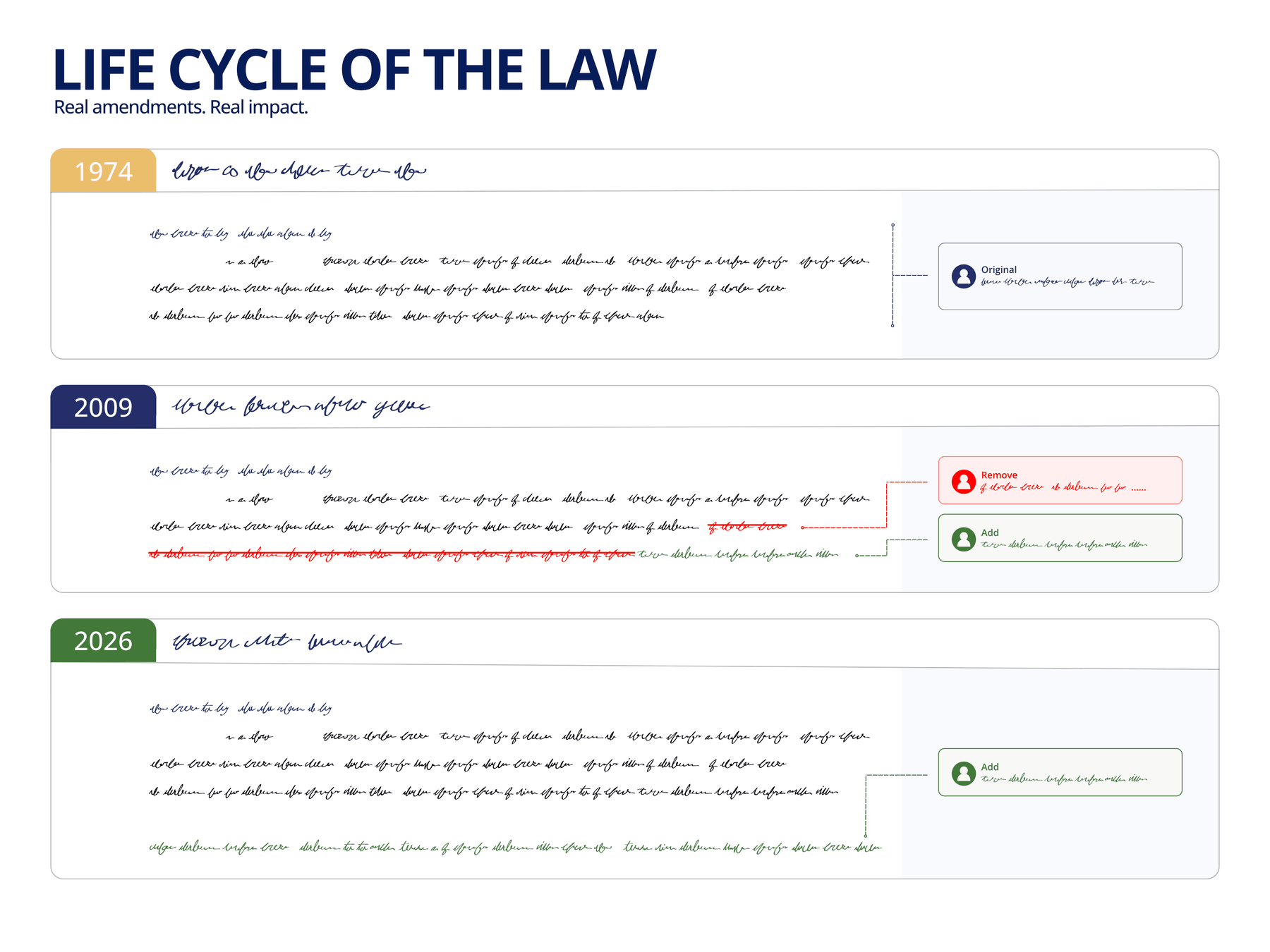
Governments usually published laws as PDFs or Word documents. To a computer, a PDF is just a picture of text. The computer doesn’t know the difference between a title, a penalty, a date, or a judge’s final ruling. Furthermore, laws are rarely written once and left alone; they are constantly amended, updated, or repealed. Trying to track how a specific paragraph of a law has changed over 50 years across hundreds of different documents is incredibly difficult and manual.
In short, when laws are buried in disorganized, incompatible formats, it’s very hard for regular citizens, journalists, and most of all, lawyers to search for and understand the rules that govern them. AI is no different.
ZoneLex is solving this exact problem. We are doing the highly unglamorous job of data engineering across the landscape of U.S. Zoning law by tagging every single piece of legal text so that our system knows exactly what it is looking at and most of all, what our clients are looking for. For example, ZoneLex knows that “This sentence is an amendment,” or “This date is when the ordinance goes into effect.”
This allows our data-as-a-service architecture to easily track the “life cycle” of the law. Enabling our clients to see exactly how a law looked years ago versus today, much like the “Track Changes” feature in Microsoft Word but scaled up for the entirety of the United States’ zoning law infrastructure that we are building.
By standardizing the format of the entirety U.S. Zoning law, we are building a highly searchable and machine-readable data set, making what has seemed impossible, possible.