
Industry News: 511 Bills and the Quiet Rewrite of Who Controls American Land Use
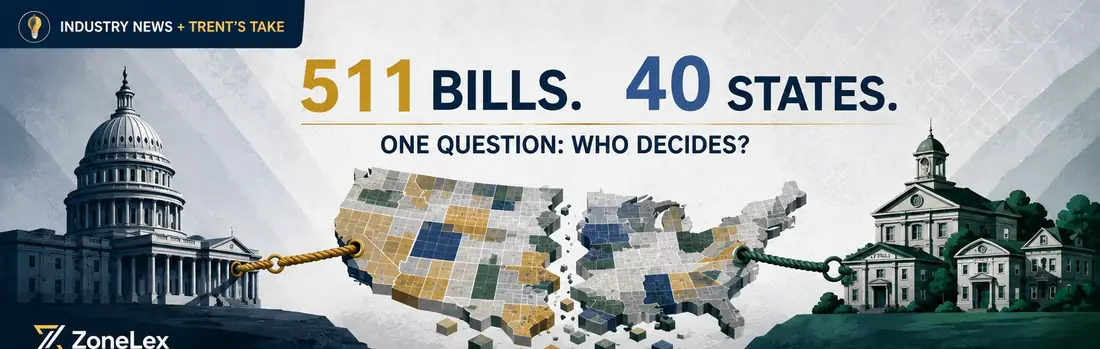
In 2025, 511 bills containing clauses that preempt county land use authority were introduced across 40 states, and roughly three out of four sought to override or substantially constrain that authority. With Trent’s take on what the churn means for anyone who has to practice under these codes.
Read moreRead less
The news
There is a massive shift in zoning law occurring across the U.S. to address housing supply and affordability, and the numbers behind it are striking.
According to the National Association of Counties, 511 bills containing clauses that preempt county land use authority were introduced across 40 states in 2025. Roughly three out of four of those measures sought to significantly alter county authority over land use by overriding it or substantially constraining it.
Some context on why that matters: in 41 states, counties hold some measure of land use authority, determining what can be built and where, including regulations around zoning, subdivisions, development, permitting, and processing. Since the 2010s, however, states have increasingly passed laws preempting how counties set those rules, shifting decision-making power away from local governments and local residents.
The driver is the housing shortage, though nobody agrees on its size. Private analyses like Zillow place the cumulative deficit at 4.7 million units. Traditional industry groups cite 2 to 3.7 million. A White House economic report estimates a broader gap of 10 million homes.
Counties are pushing back on the premise that they are the problem, pointing to the $17.7 billion they invest annually in the construction, operation, and support of housing and redevelopment projects. Many counties share the goal of increasing supply. What they object to is the removal of local authority to decide how.
Trent’s take
Here is what I keep coming back to: 511 bills is not a trend. It is a rewrite.
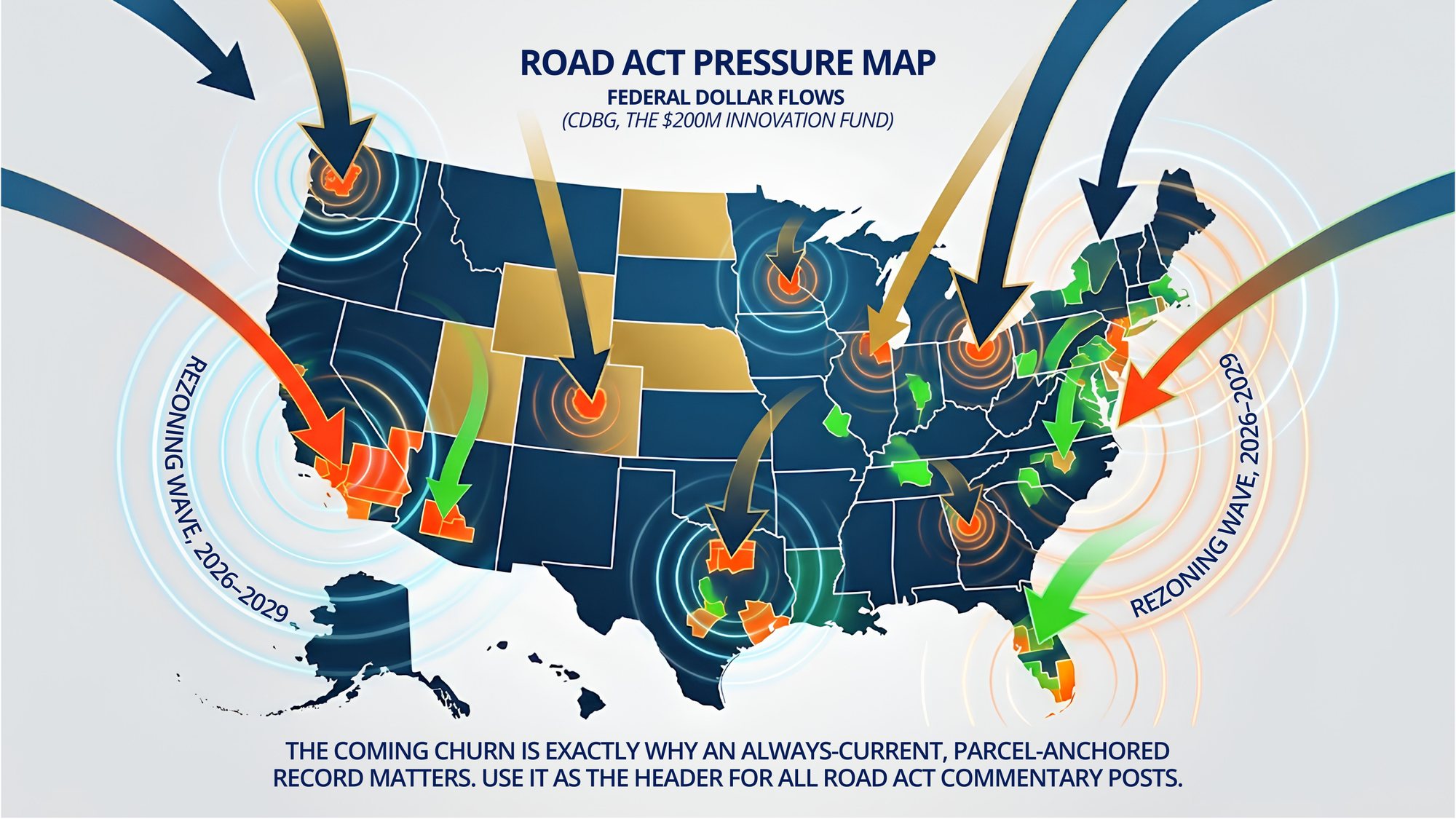
We may be watching the largest transfer of land use authority in modern American history, and it is happening one statehouse at a time, one preemption clause at a time, with almost nobody outside this industry paying attention. Florida’s HB 399 and SB 180 are one flavor of it. The Build Now provisions tying CDBG dollars to housing production are another. Add 40 states’ worth of preemption bills on top and you get the picture.
And look, I understand both sides of this one. The states are not wrong that the current system has stalled. When roughly a quarter of every development dollar is absorbed by regulatory cost and friction, not land, not labor, not lumber, something in the machine is broken. But the counties are not wrong either. They are the ones sitting in the hearing rooms. They know which intersection floods and which street cannot take another 400 cars a day. Local knowledge is real, and $17.7 billion a year in county housing investment is not nothing.
Here is the part I can speak to with confidence, though, regardless of which side wins: the churn itself.
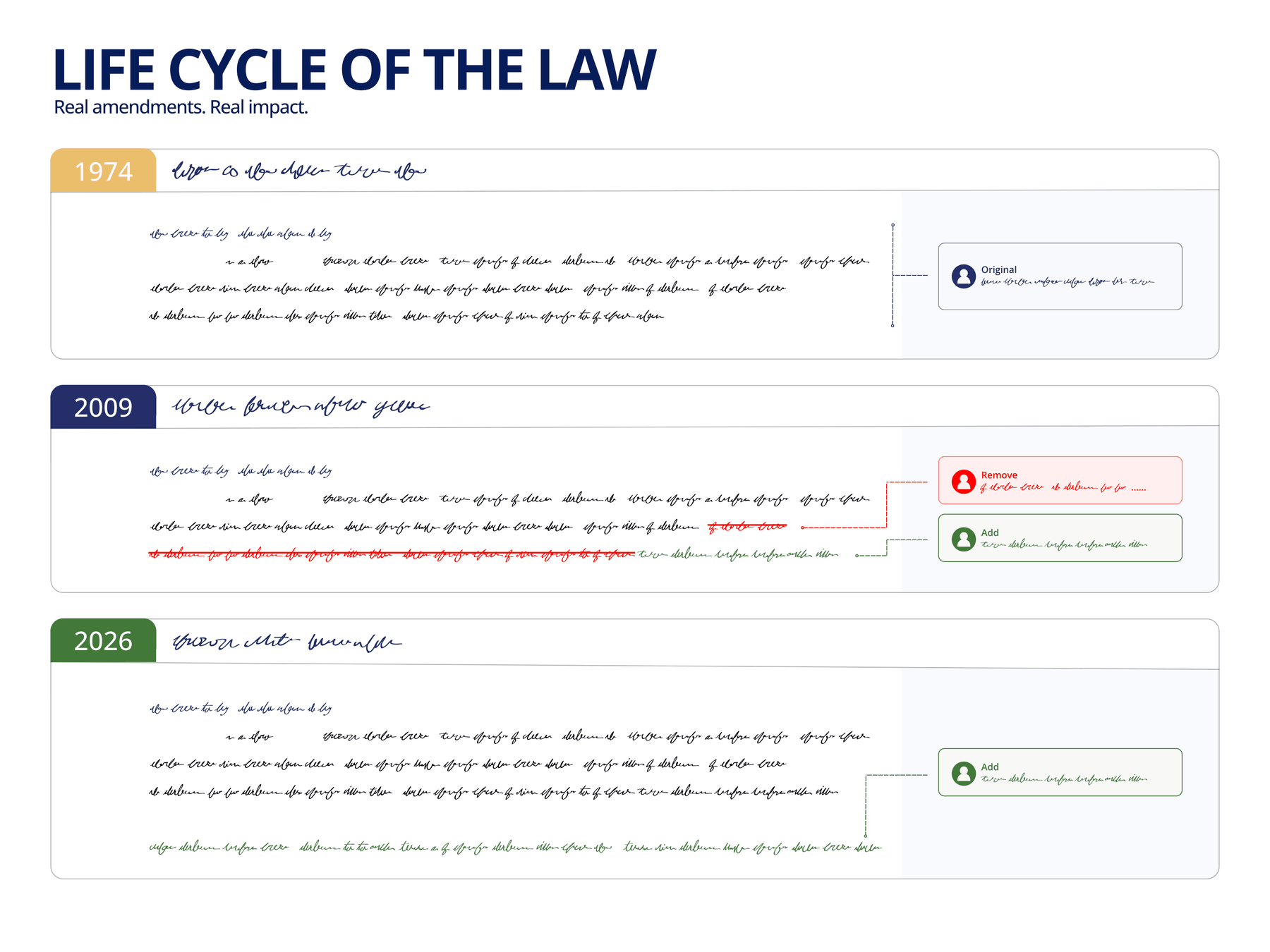
Every one of these bills, whether it passes, fails, or gets challenged, changes what the law is somewhere. Codes are being amended, overridden, voided, and phased in on different timelines in different states, sometimes retroactively. For the people who have to practice under these codes, the hard question is no longer just “what does the law say?” It is “what did the law say, on this date, for this parcel, and which version actually controls?”
That question was hard enough when zoning law changed slowly. It is about to be asked ten thousand times a day.
So I will leave you with the questions I genuinely wrestle with. Given the economic stagnation of housing development, who should be in charge? Is our democratization of zoning law paralyzing progress? Should states take control? Or should this remain with local city and county government?
I would love to hear where you land.
Sources:
State Policy: Land Use, National Association of Counties →
America’s Housing Deficit Held Steady at 4.7 Million Units, Zillow →
The U.S. Is Short 10 Million Houses: A New White House Report, PBS News →