
When the first wave of legal AI hit the profession, hallucination got all the attention, and for good reason. A fabricated citation is easy to spot, easy to sanction, and easy to write about. Two years on, our own view has shifted. Hallucination is a risk we design against every day, but it was never the mountain we thought it was at the start.
The quieter failure is staleness
In land use, the source material itself moves. A council adopts an overlay on a Tuesday night. A planning department reposts a code section with a silent amendment. A condition of approval travels into a staff report and never makes it back onto the zoning map. None of that is a hallucination. Every word of it is real. It is simply no longer current, and a model repeating it confidently is wrong in a way that no citation check will ever catch.
The lesson is architectural, not moral
Most of the industry response to hallucination has been about restraint: tighter prompting, more disclaimers, a human somewhere in the loop. All useful, and all built on the same assumption, which is that the unit of work is the answer. We came out of this believing the unit of work is the record. If the record is sourced, dated, and watched, the answer takes care of itself. If it is not, no amount of caution at the output stage saves you.
Zoning law has a lifecycle, so the answer needs one too
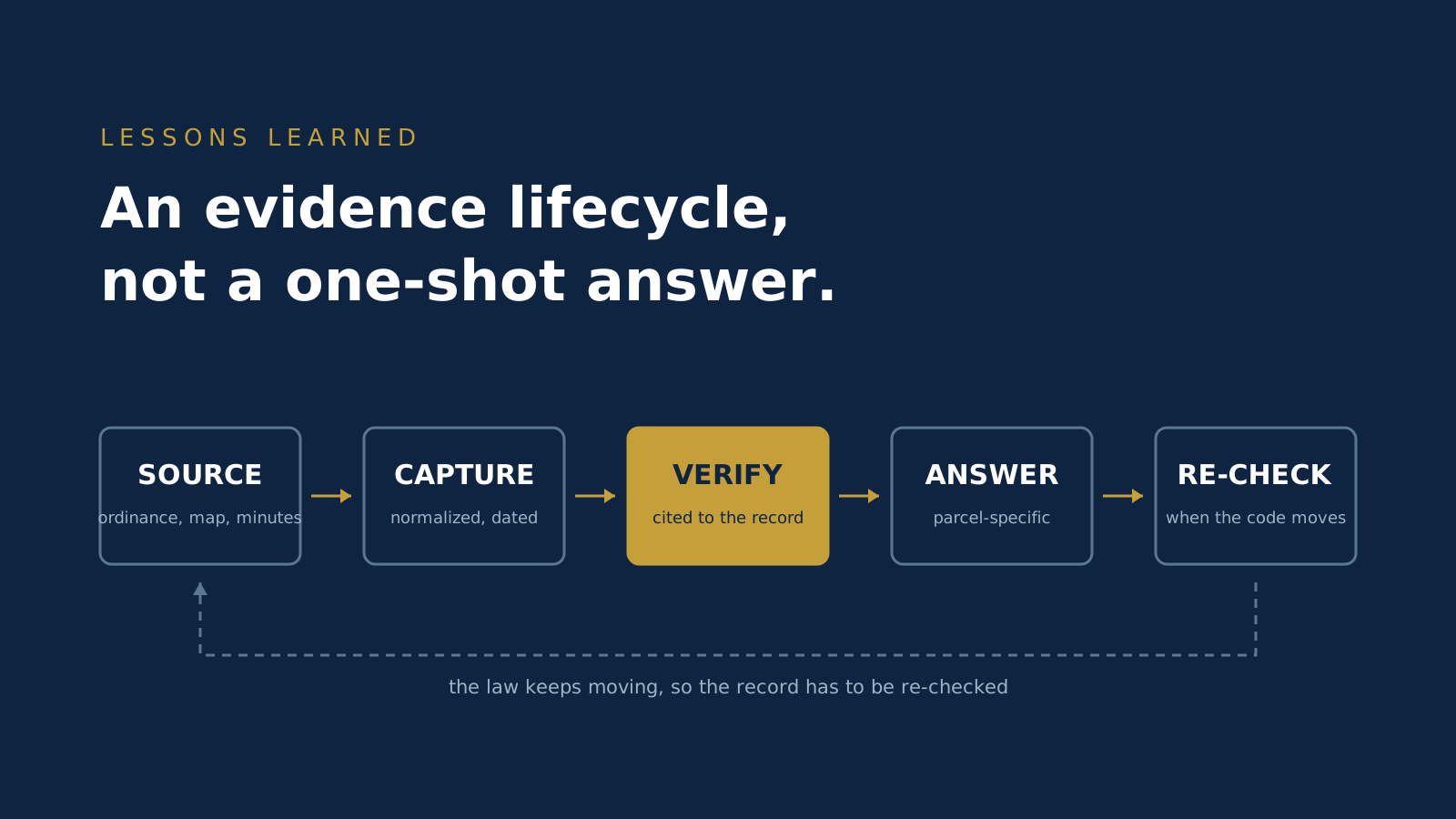
That is why we stopped drawing our architecture as a pipeline and started drawing it as a loop. Source, capture, verify, answer, re-check. The re-check is the part that most legal AI conversations skip, and it is the part land-use professionals actually live with, because the ordinance that governed the parcel at diligence may not be the ordinance that governs it at entitlement.
Three things we took from it
Provenance before fluency. A short answer that points at the ordinance beats a beautiful paragraph that points at nothing. If a fact cannot be traced to a public record, it does not belong in the workspace.
Dates are facts. Every captured provision carries an as-of date and the version it came from. “Current” is a claim, and claims need evidence.
An answer is a subscription, not a receipt. If the underlying source changes, the people who relied on it should hear about it. That is a product decision, but it started as a lesson about what the hallucination debate was missing.
Hallucination is a design constraint. Staleness is the business problem.
None of this removes the professional from the work, and it is not meant to. Land use is deal work as much as legal work. The value an attorney adds is rarely being provably right on the record. It is knowing the law well enough to steer a client toward the best available outcome. Our job is to make sure the record they are steering from is complete, sourced, and current.