
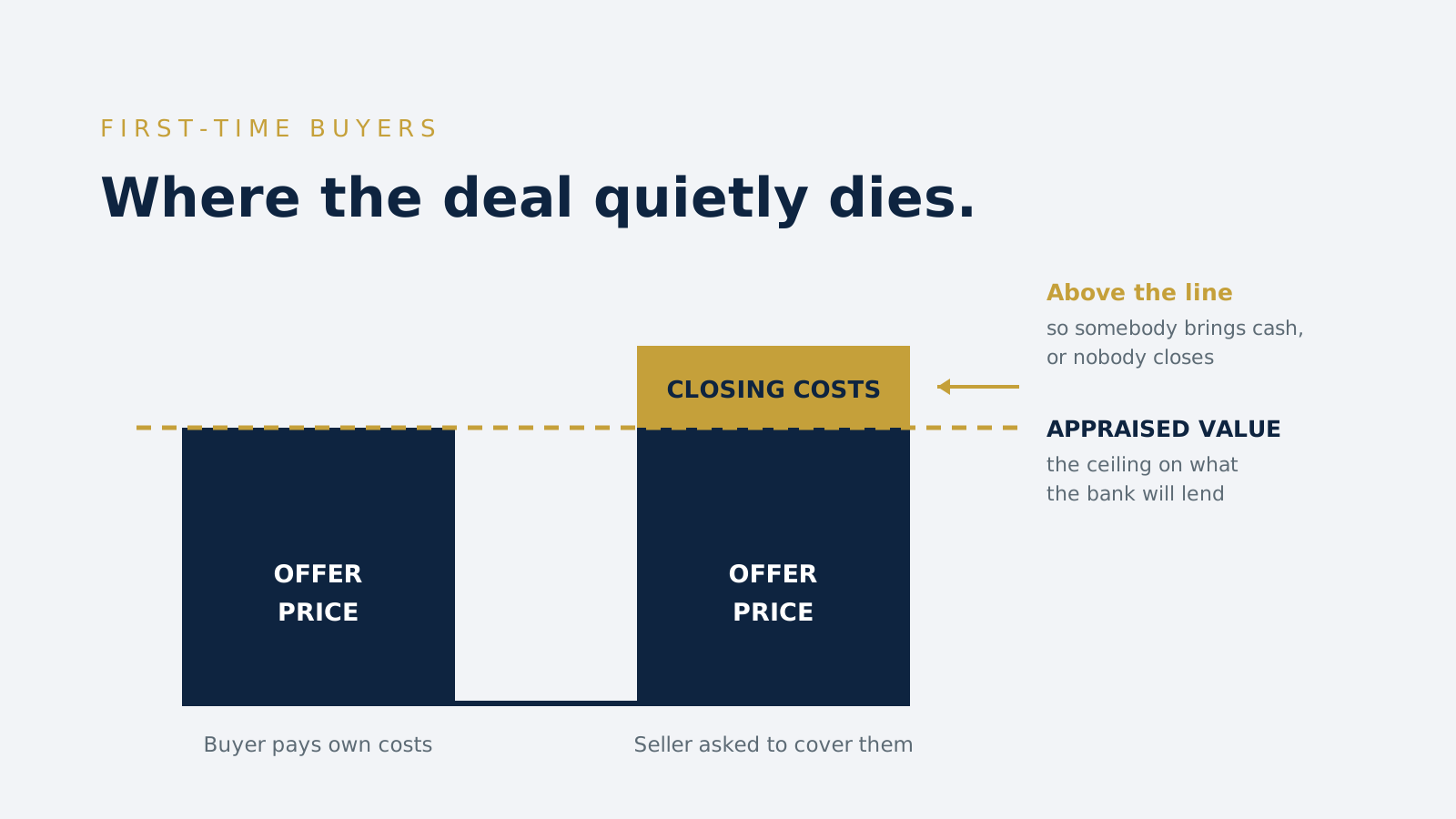
There is a small mechanical detail buried in first-time homebuying that decides more outcomes than almost anything in the zoning code, and almost nobody outside the transaction ever sees it.
The mechanics
An FHA buyer is, by design, someone with a small down payment. Getting to the down payment often uses up the cash. Closing costs—origination, title, escrow, prepaids, recording—are a separate several thousand dollars that has to show up on the same day. The standard fix is a seller concession: the seller agrees to cover the buyer’s closing costs out of the proceeds.
Sellers do not do that for free. To get one to agree, a buyer generally has to come in at or above asking, so the concession is effectively financed into the price. Which brings in the appraisal. The loan is sized against appraised value, not against the contract. If the appraisal does not support the higher number, the lender will not lend the difference, and the buyer has to bring it in cash—the exact cash they did not have in the first place.
In a soft market this works. In a hot one it does not.
When inventory sits, sellers pay closing costs and appraisals come in fine. When there are six offers by Sunday, a seller has no reason to take the offer that costs them money, and the comps are already stretched. The FHA buyer is not outbid on price. They are outbid on structure. The circle simply never closes.
Why a zoning company is writing about this
Because the condition that makes it impossible is supply, and supply is a land-use output. The entry-level home that would clear this hurdle is exactly the product that got zoned out: the small-lot house, the duplex half, the townhouse, the fourplex unit. It is not being built because in most places it cannot be built, and the ordinance is the reason.
Follow that thread and it runs everywhere: household wealth formation, commute lengths and traffic, transit ridership, stormwater and impervious surface, school enrollment, municipal fiscal health. The why behind fixing land use is not one story. It is a dozen of them sharing a root cause.
The first-time buyer is not priced out at the closing table. They are priced out at the zoning hearing, years earlier.
This is descriptive, not advice: the point is simply that a financing rule and a zoning rule are quietly deciding the same outcome, and only one of them ever gets debated in public.